What Is Volatility?
How does the stock market actually work? This beginner-friendly guide explains investing and stock trading using simple real-world examples anyone can understand.
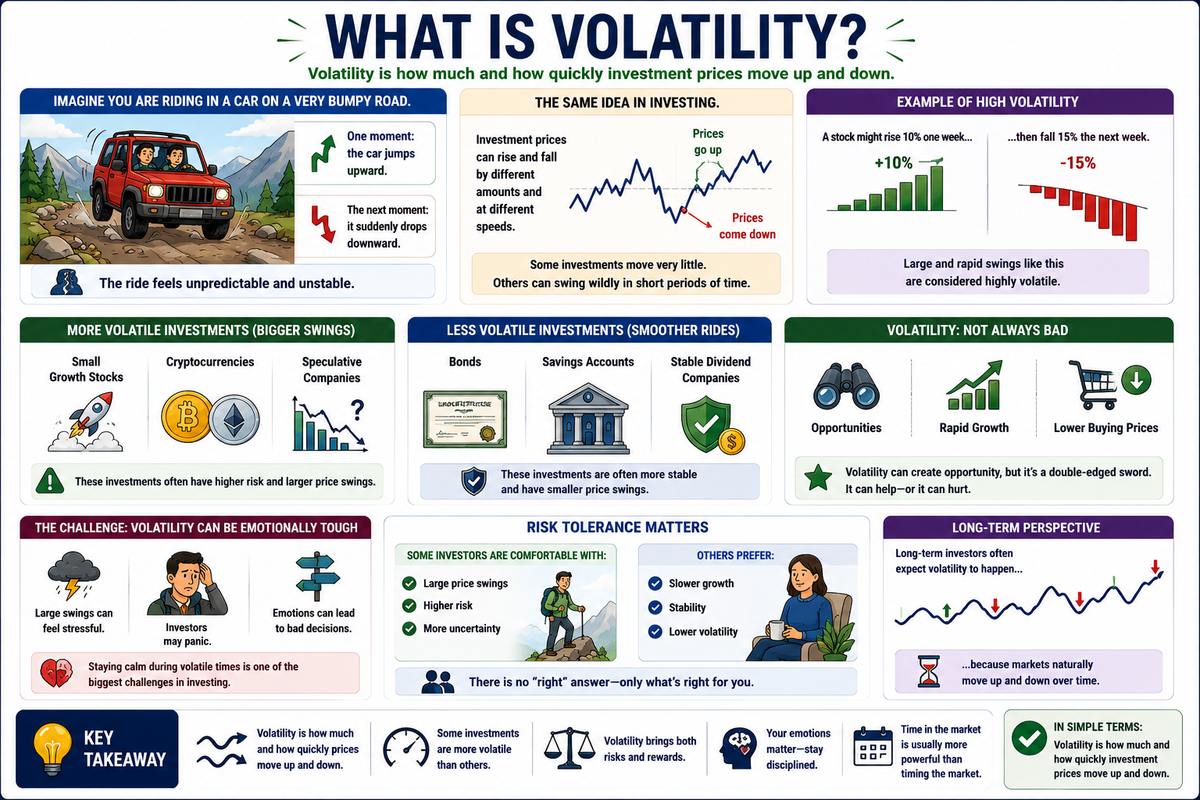
Imagine you are riding in a car on a very bumpy road.
One moment:
- the car jumps upward
The next moment:
- it suddenly drops downward
The ride feels unpredictable and unstable.
Volatility in investing feels very similar.
Volatility is:
How much and how quickly investment prices move up and down.
Some investments move very little.
Others can swing wildly in short periods of time.
For example:
- a stock might rise 10% one week
- then fall 15% the next week
That would be considered highly volatile.
Investments like:
- small growth stocks
- cryptocurrencies
- speculative companies
Are often more volatile.
Meanwhile things like:
- bonds
- savings accounts
- stable dividend companies
Are often less volatile.
Volatility itself is not always bad.
Sometimes volatility creates:
- opportunities
- rapid growth
- lower buying prices
But volatility can also make investing emotionally difficult because:
- large swings can feel stressful
- investors may panic
- emotions can lead to bad decisions
This is why risk tolerance matters.
Some investors are comfortable with:
- large price swings
- higher risk
- more uncertainty
Others prefer:
- slower growth
- stability
- lower volatility
Long-term investors often expect volatility to happen because:
Markets naturally move up and down over time.
In simple terms:
Volatility is how much and how quickly investment prices move up and down.