What Is Liquidity?
What is liquidity and why does it matter in investing and personal finance? This beginner-friendly guide explains liquidity using simple real-world examples anyone can understand.
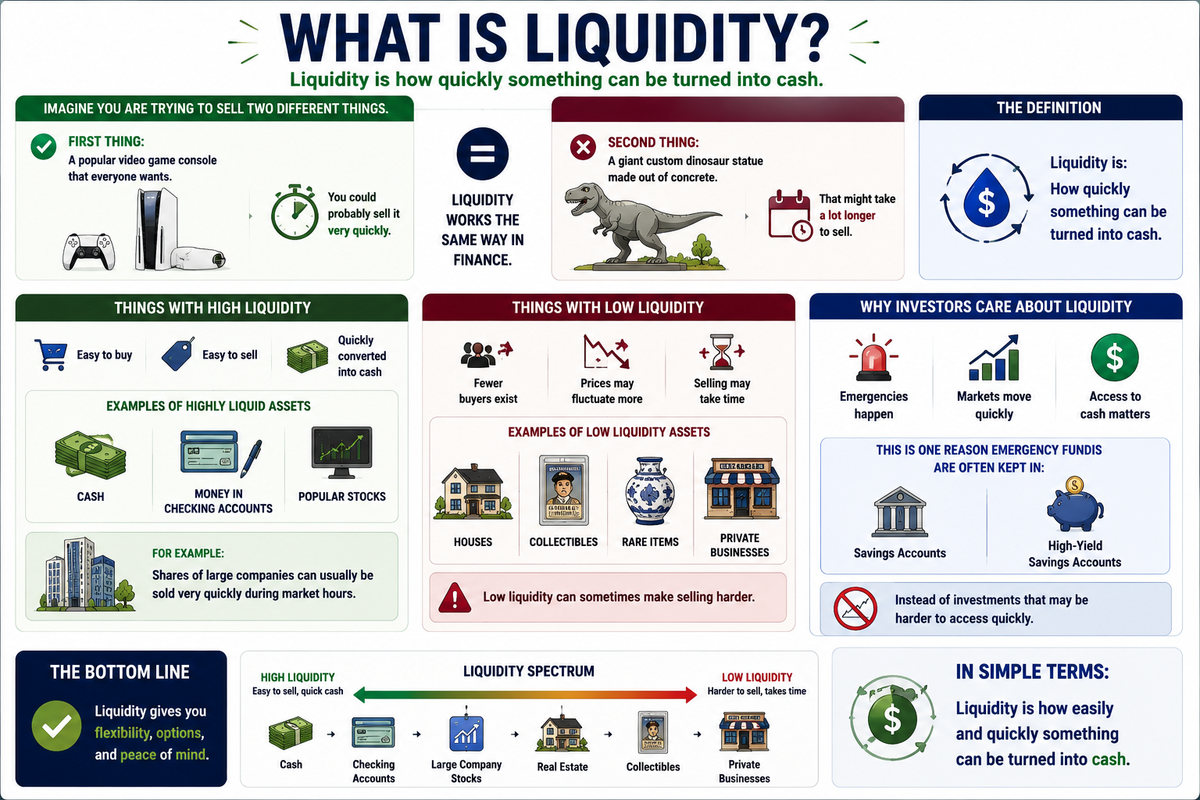
Imagine you are trying to sell two different things.
The first thing is:
- a popular video game console that everyone wants
You could probably sell it very quickly.
The second thing is:
- a giant custom dinosaur statue made out of concrete
That might take a lot longer to sell.
Liquidity works the same way in finance.
Liquidity is:
How quickly something can be turned into cash.
Things with high liquidity are:
- easy to buy
- easy to sell
- quickly converted into cash
Examples of highly liquid assets include:
- cash
- money in checking accounts
- popular stocks
For example:
- shares of large companies can usually be sold very quickly during market hours
Things with low liquidity may take longer to sell.
Examples can include:
- houses
- collectibles
- rare items
- private businesses
Low liquidity can sometimes make selling harder because:
- fewer buyers exist
- prices may fluctuate more
- selling may take time
Investors care about liquidity because:
- emergencies happen
- markets move quickly
- access to cash matters
This is one reason emergency funds are often kept in:
- savings accounts
- high-yield savings accounts
Instead of investments that may be harder to access quickly.
In simple terms:
Liquidity is how easily and quickly something can be turned into cash.