What Is Dollar-Cost Averaging?
What is dollar-cost averaging and why do long-term investors use it? This beginner-friendly guide explains the strategy using simple real-world examples anyone can understand.
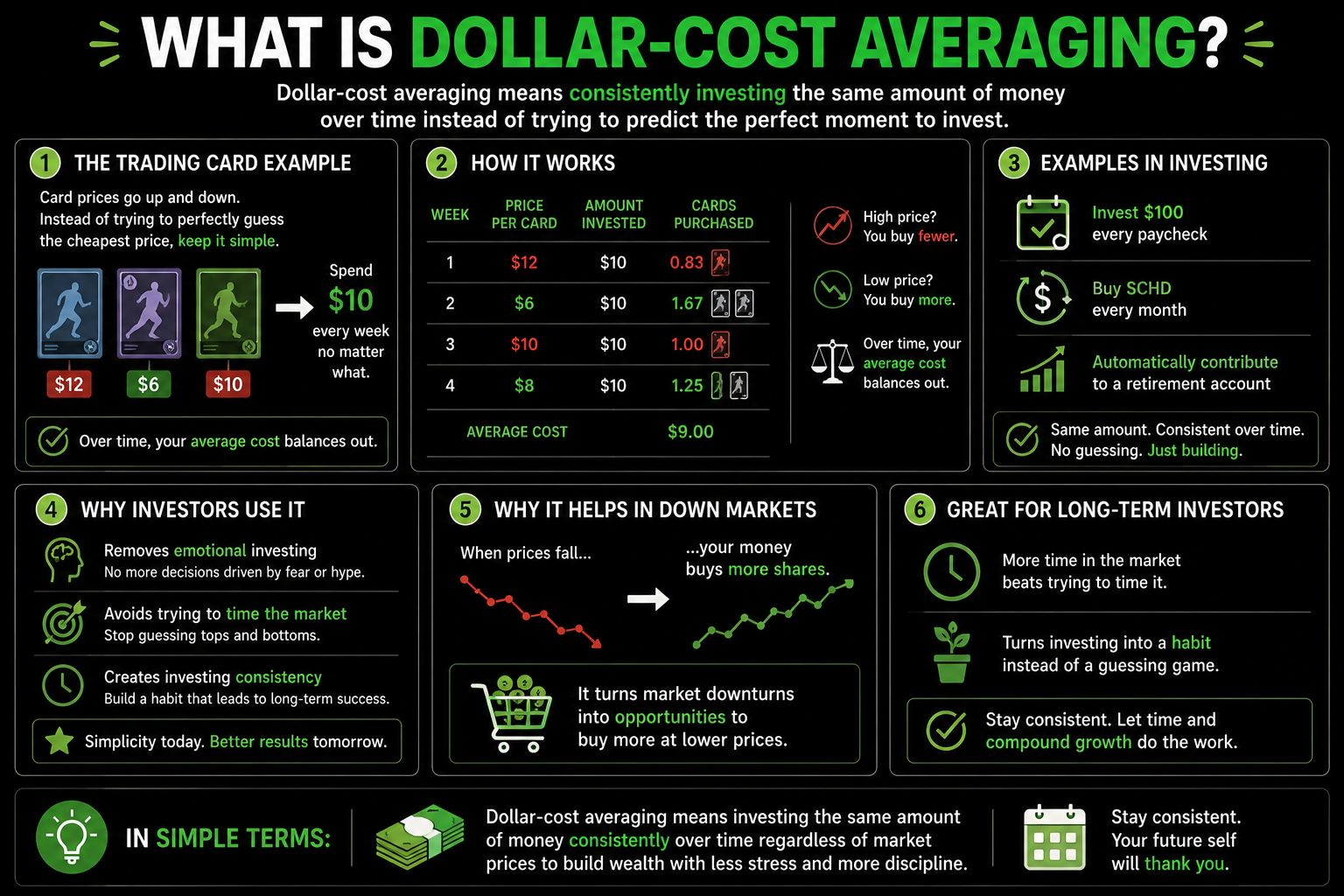
Imagine you love buying trading cards.
But sometimes:
- the cards are expensive
- sometimes they are cheap
- and sometimes prices move up and down every week
Instead of trying to perfectly guess the cheapest price, you decide to do something simpler.
You spend:
- $10 every week
- no matter what the price is
Some weeks:
- you buy fewer cards because prices are high
Other weeks:
- you buy more cards because prices are lower
Over time:
Your average cost balances out.
That is basically what dollar-cost averaging is.
Dollar-cost averaging means:
Investing the same amount of money consistently over time regardless of market prices.
For example:
- investing $100 every paycheck
- buying SCHD every month
- automatically contributing to a retirement account
Many investors use this strategy because:
- it removes emotional investing
- it avoids trying to perfectly time the market
- it creates investing consistency
This can also make market downturns feel less scary.
Why?
Because when prices fall:
Your money may buy more shares.
Long-term investors often like dollar-cost averaging because it turns investing into a habit instead of a guessing game.
In simple terms:
Dollar-cost averaging means consistently investing the same amount of money over time instead of trying to predict the perfect moment to invest.