What Is Diversification?
What is diversification and why do investors talk about it so much? This beginner-friendly guide explains diversification using simple real-world examples anyone can understand.
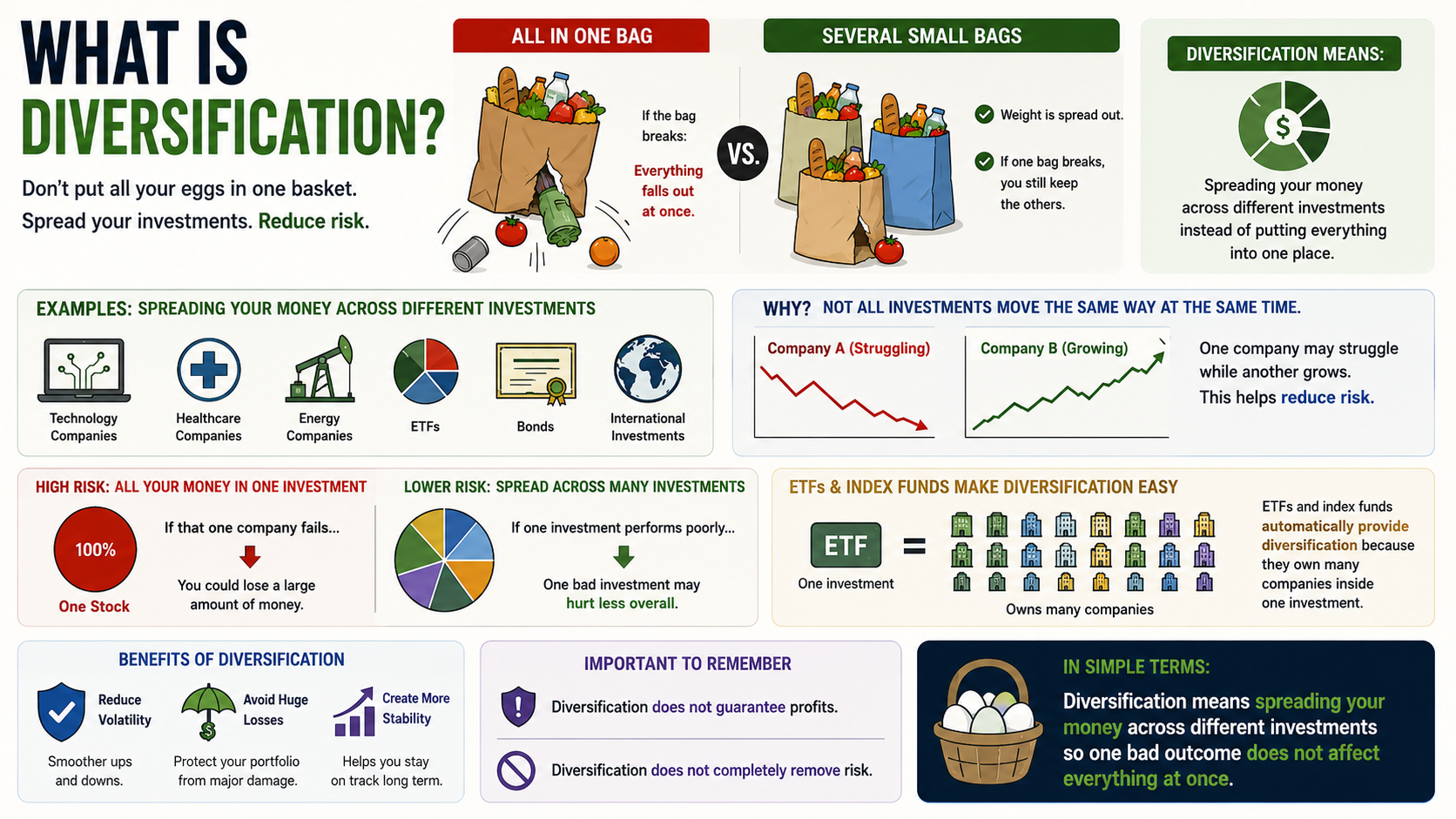
Imagine you are carrying groceries home in one giant bag.
If the bag breaks:
Everything falls out at once.
Now imagine instead:
- you use several smaller bags
- the weight is spread out
- if one bag breaks, you still keep the others
That is basically what diversification means in investing.
Diversification means:
Spreading your money across different investments instead of putting everything into one place.
For example:
Instead of buying only one stock, an investor might own:
- technology companies
- healthcare companies
- energy companies
- ETFs
- bonds
- international investments
Why?
Because not all investments move the same way at the same time.
One company may struggle while another grows.
This helps reduce risk.
Imagine putting all your money into one small company and that business fails.
You could lose a large amount of money.
But if your money is spread across many investments:
One bad investment may hurt less overall.
This is one reason ETFs and index funds are popular.
They automatically provide diversification because they own many companies inside one investment.
Diversification does not guarantee profits.
And it does not completely remove risk.
But many investors use diversification to help:
- reduce volatility
- avoid huge losses
- create more stability over time
In simple terms:
Diversification means spreading your money across different investments so one bad outcome does not affect everything at once.