What Is Dilution in Stocks?
What is dilution in stocks and why do investors care about it? This beginner-friendly guide explains stock dilution using simple real-world examples anyone can understand.
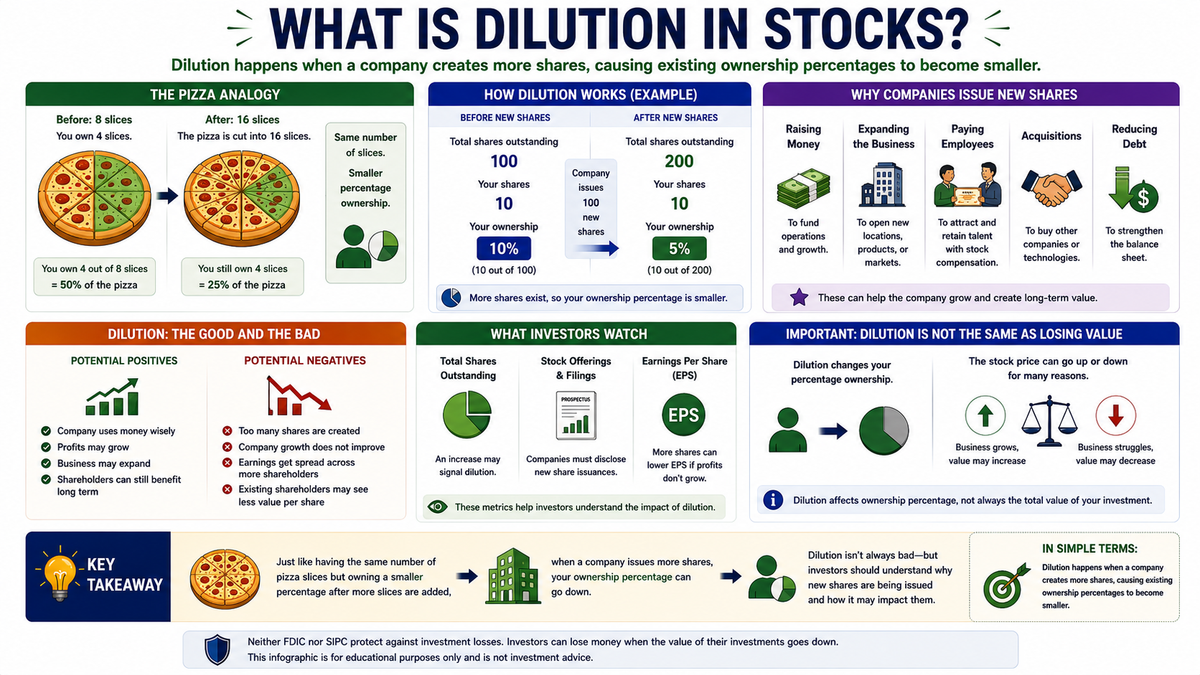
Imagine a pizza is cut into 8 slices.
You own:
4 slices
That means you own:
Half the pizza
Now imagine the pizza suddenly gets cut into 16 slices instead.
But you still only own:
4 slices
Your number of slices stayed the same.
But your percentage ownership became smaller.
That is basically what dilution means in stocks.
Dilution happens when a company creates and issues additional shares.
When more shares exist:
Existing shareholders may own a smaller percentage of the company.
For example:
Imagine a company originally has:
- 100 shares total
You own:
- 10 shares
That means you own:
10% of the company
Now imagine the company issues:
- 100 new shares
There are now:
- 200 total shares
But you still own:
- 10 shares
Now your ownership becomes:
5% instead of 10%
This is dilution.
Companies may issue new shares for reasons like:
- raising money
- expanding the business
- paying employees with stock
- acquisitions
- reducing debt
Dilution is not always bad.
If the company uses the new money wisely:
- profits may grow
- the business may expand
- shareholders could still benefit long term
But dilution can also hurt investors if:
- too many shares are created
- company growth does not improve
- earnings become spread across more shareholders
This is why investors pay attention to:
- total shares outstanding
- stock offerings
- earnings per share (EPS)
In simple terms:
Dilution happens when a company creates more shares, causing existing ownership percentages to become smaller.