What Is Compound Interest?
What is compound interest and why do investors call it powerful? This beginner-friendly guide explains compound growth using simple real-world examples anyone can understand.
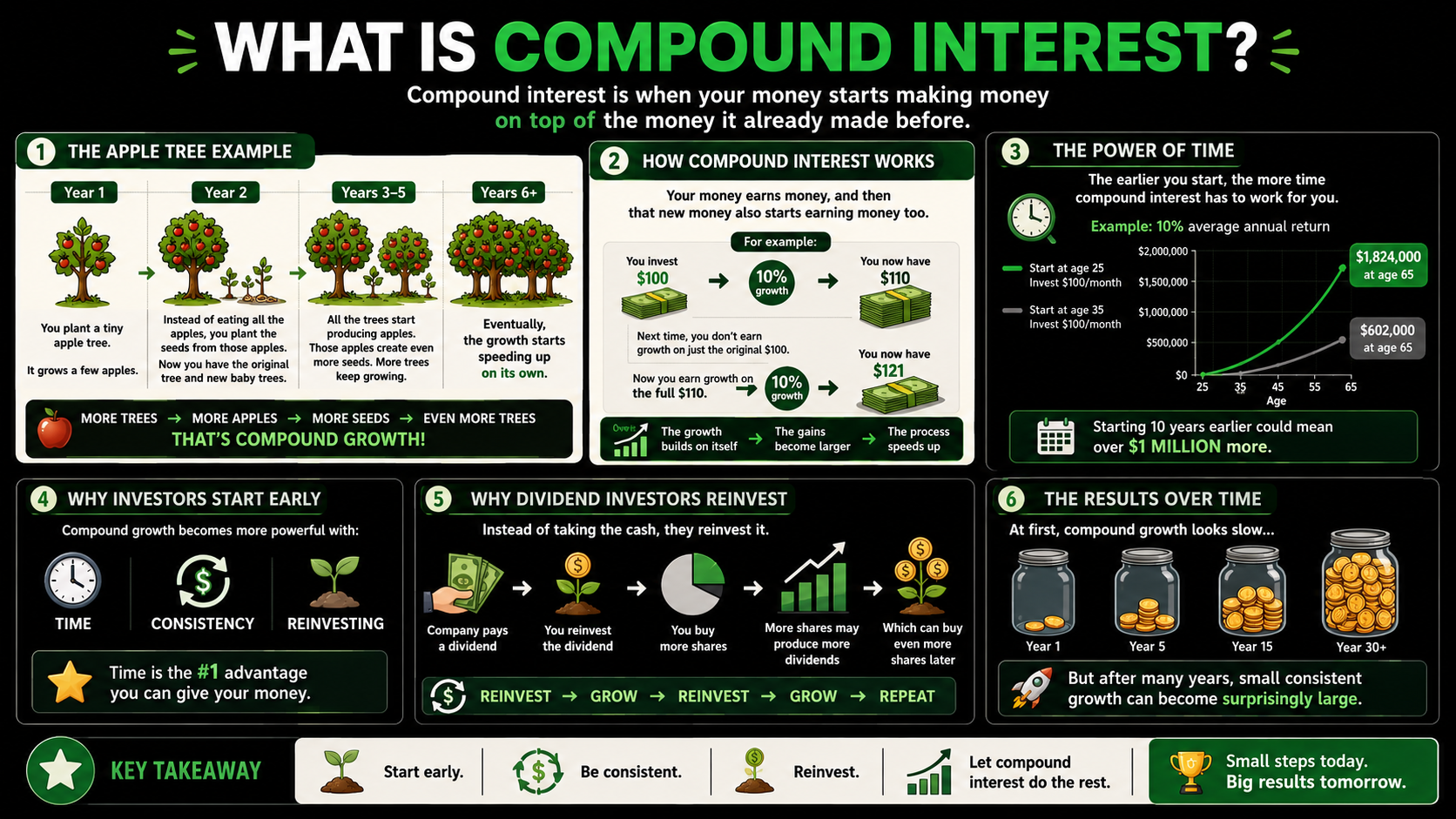
Imagine you plant a tiny apple tree in your backyard.
The first year:
- the tree grows a few apples
Instead of eating all the apples, you plant the seeds from those apples too.
Now you have:
- the original tree
- new baby trees growing beside it
A few years later:
- all the trees start producing apples
- those apples create even more seeds
- more trees keep growing
Eventually:
The growth starts speeding up on its own.
That is basically how compound interest works.
Compound interest happens when:
Your money earns money, and then that new money also starts earning money too.
For example:
Imagine you invest $100.
If it grows 10%:
- you now have $110
Next time, you do not earn growth on just the original $100 anymore.
Now you earn growth on:
The full $110.
Over time:
- the growth builds on itself
- the gains become larger
- the process speeds up
This is why investors start early whenever possible.
Because compound growth becomes more powerful with:
- time
- consistency
- reinvesting
This is also why dividend investors reinvest dividends.
Instead of taking the cash:
- they buy more shares
- those shares may produce more dividends
- which can buy even more shares later
At first, compound growth looks slow.
But after many years:
Small consistent growth can become surprisingly large.
In simple terms:
Compound interest is when your money starts making money on top of the money it already made before.