What Is Asset Allocation?
What is asset allocation and why do investors care about it? This beginner-friendly guide explains portfolio balance using simple real-world examples anyone can understand.
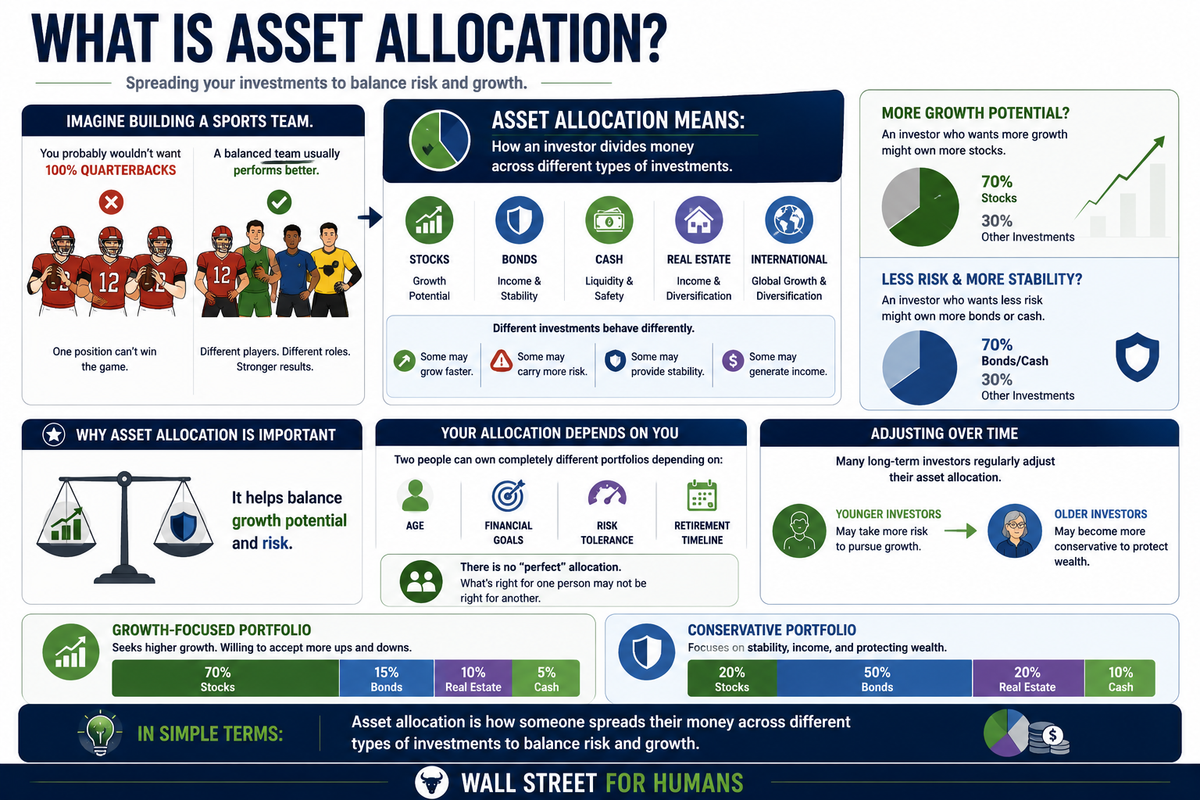
Imagine building a sports team.
You probably would not want:
- 100% quarterbacks
- or 100% goalkeepers
A balanced team usually performs better because different players serve different roles.
Asset allocation works the same way in investing.
Asset allocation means:
How an investor divides money across different types of investments.
For example:
- stocks
- bonds
- cash
- real estate
- international investments
Different investments behave differently.
Some may:
- grow faster
- carry more risk
- provide stability
- generate income
An investor who wants more growth might own:
- more stocks
An investor who wants less risk might own:
- more bonds or cash
Asset allocation is important because:
It helps balance growth potential and risk.
Two people can own completely different portfolios depending on:
- age
- financial goals
- risk tolerance
- retirement timeline
Many long-term investors regularly adjust their asset allocation over time.
For example:
- younger investors may take more risk
- older investors may become more conservative
In simple terms:
Asset allocation is how someone spreads their money across different types of investments to balance risk and growth.