What Is an Index Fund?
What is an index fund and why do so many investors recommend them? This beginner-friendly guide explains index funds using simple real-world examples anyone can understand.
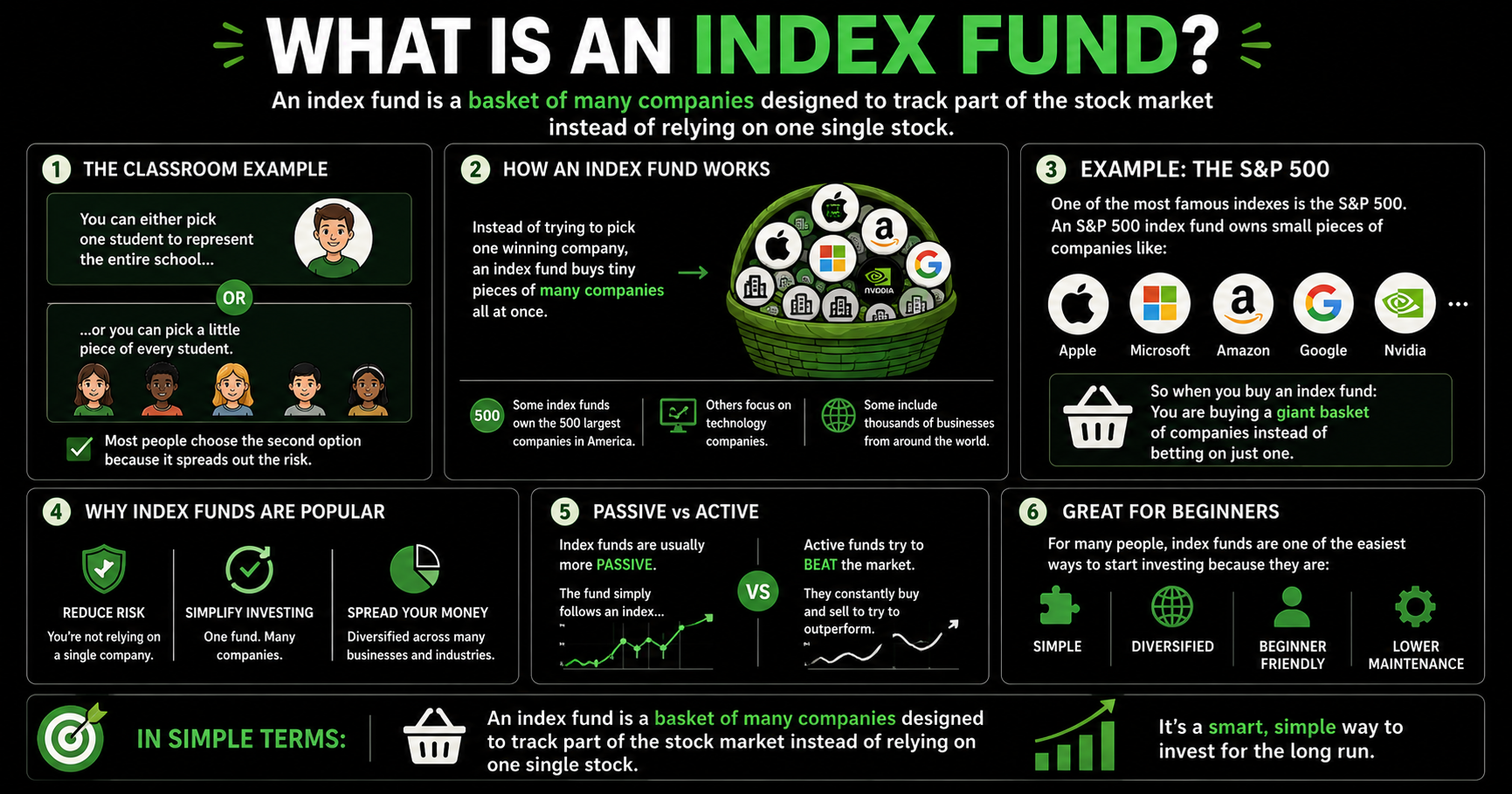
Imagine your teacher tells the class:
“You can either pick one student to represent the entire school… or you can pick a little piece of every student.”
Most people would probably choose the second option because it spreads out the risk.
An index fund works the same way.
Instead of trying to pick one winning company, an index fund buys tiny pieces of many companies all at once.
For example:
- some index funds own the 500 largest companies in America
- others focus on technology companies
- some include thousands of businesses from around the world
One of the most famous indexes is the S&P 500.
An S&P 500 index fund owns small pieces of companies like:
- Apple
- Microsoft
- Amazon
- Nvidia
So when you buy an index fund:
You are buying a giant basket of companies instead of betting on just one.
This is why index funds are popular with long-term investors.
They help:
- reduce risk
- simplify investing
- spread money across many businesses
Index funds are also usually considered more passive.
That means:
The fund simply follows an index instead of constantly trying to beat the market.
For many people, index funds are one of the easiest ways to start investing because:
- they are simple
- diversified
- beginner friendly
- lower maintenance
In simple terms:
An index fund is a basket of many companies designed to track part of the stock market instead of relying on one single stock.