What Is an Expense Ratio?
What is an expense ratio and why do investors pay attention to it? This beginner-friendly guide explains fund fees using simple real-world examples anyone can understand.
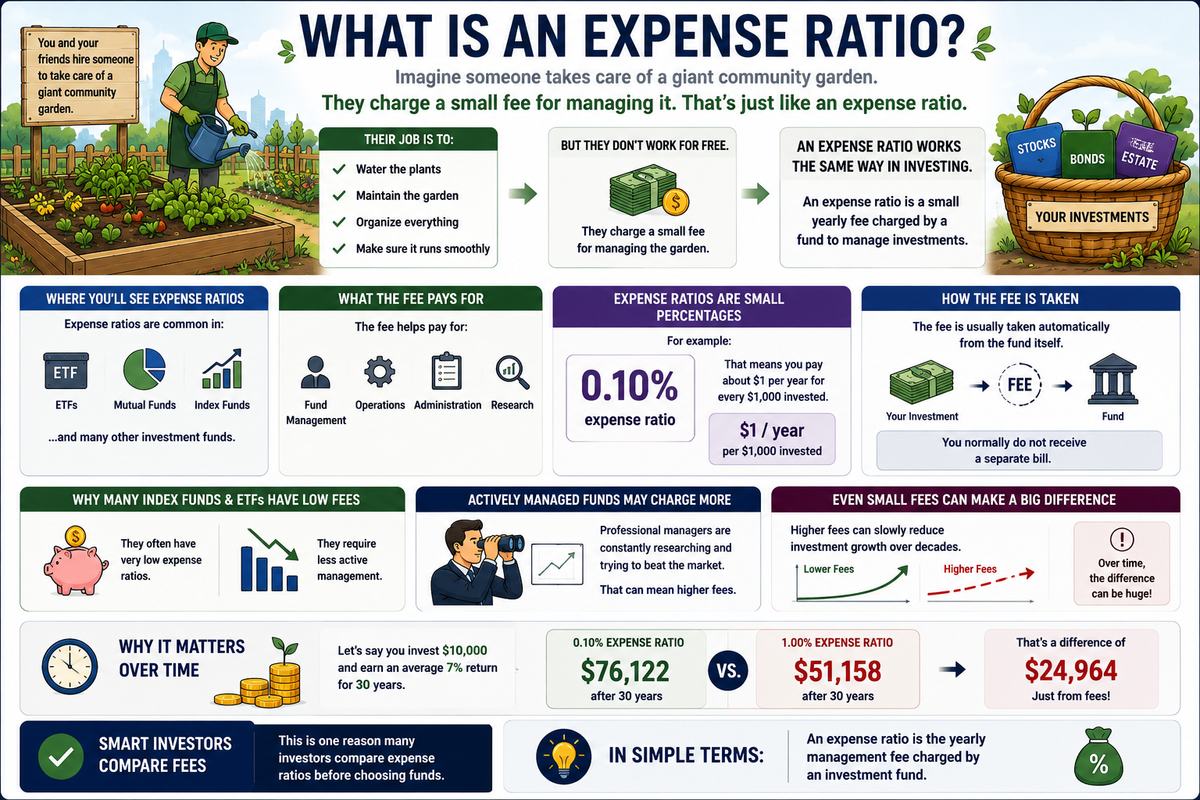
Imagine you and your friends hire someone to take care of a giant community garden.
Their job is to:
- water the plants
- maintain the garden
- organize everything
- make sure it runs smoothly
But they do not work for free.
They charge a small fee for managing the garden.
An expense ratio works the same way in investing.
An expense ratio is:
A small yearly fee charged by a fund to manage investments.
This fee is common in things like:
- ETFs
- mutual funds
- index funds
The fee helps pay for:
- fund management
- operations
- administration
- research
Expense ratios are usually shown as percentages.
For example:
If a fund has a:
0.10% expense ratio
That means:
- you pay about $1 per year for every $1,000 invested
The fee is usually taken automatically from the fund itself.
You normally do not receive a separate bill.
Many index funds and ETFs are popular because:
- they often have very low expense ratios
- they require less active management
Some actively managed funds may charge higher fees because professional managers are constantly trying to beat the market.
Even small fees can matter over long periods of time.
Why?
Because:
Higher fees can slowly reduce investment growth over decades.
This is one reason many investors compare expense ratios before choosing funds.
In simple terms:
An expense ratio is the yearly management fee charged by an investment fund.