What Is a Bull Market and a Bear Market?
What is a bull market and a bear market? This beginner-friendly guide explains market cycles using simple real-world examples anyone can understand.
Imagine two very different moods in the stock market.
One day:
- people feel excited
- investors are optimistic
- stock prices keep rising
- everyone thinks the future looks good
Another day:
- people feel nervous
- investors are scared
- stock prices keep falling
- everyone worries about the economy
These two situations have names.
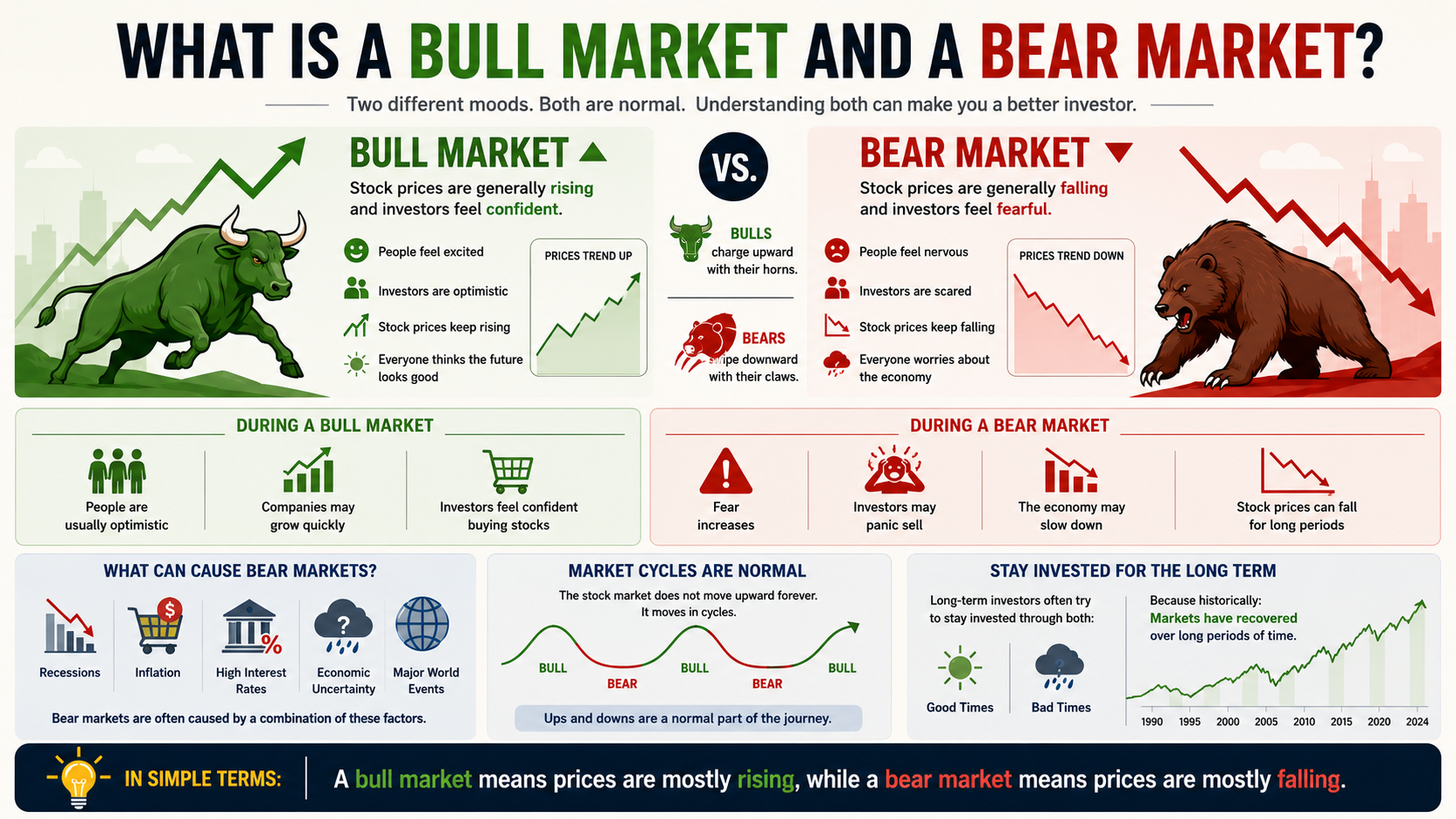
A bull market is when:
Stock prices are generally rising and investors feel confident.
A bear market is when:
Stock prices are generally falling and investors feel fearful.
People often say:
- bulls charge upward with their horns
- bears swipe downward with their claws
That is an easy way to remember the difference.
During a bull market:
- people are usually optimistic
- companies may grow quickly
- investors feel confident buying stocks
During a bear market:
- fear increases
- investors may panic sell
- the economy may slow down
- stock prices can fall for long periods
Bear markets can happen because of things like:
- recessions
- inflation
- high interest rates
- economic uncertainty
- major world events
Bull and bear markets are both normal parts of investing.
The stock market does not move upward forever.
It moves in cycles.
Long-term investors often try to stay invested through both:
- good times
- bad times
Because historically:
Markets have recovered over long periods of time.
In simple terms:
A bull market means prices are mostly rising, while a bear market means prices are mostly falling.