What Is a Bond?
What is a bond and how does it work? This beginner-friendly guide explains bonds using simple real-world examples anyone can understand.
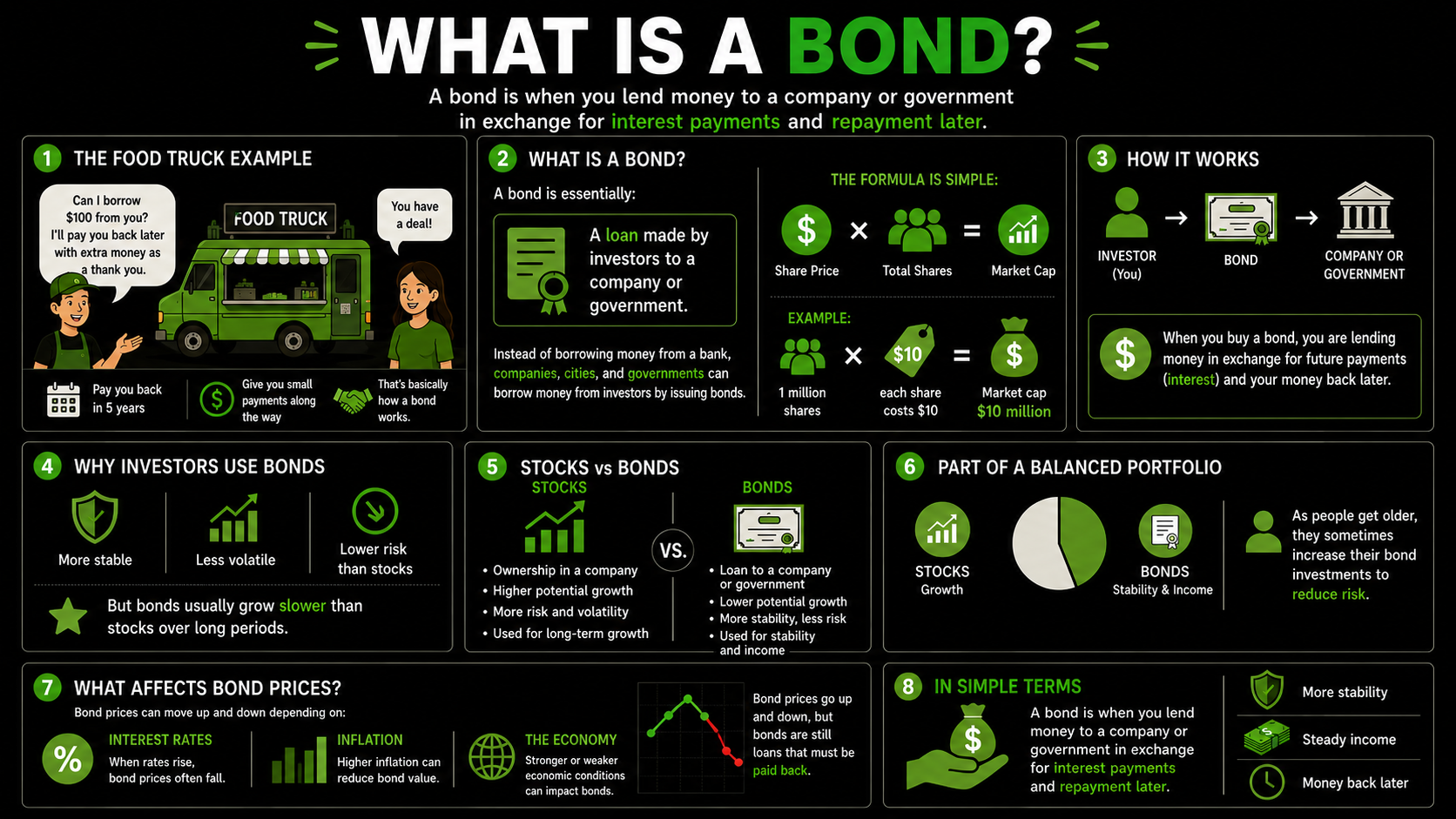
Imagine your friend wants to open a food truck but does not have enough money.
So they ask:
“Can I borrow $100 from you? I’ll pay you back later with extra money as a thank you.”
You agree.
Now imagine they promise:
- to pay you back in 5 years
- to give you small payments along the way
That is basically how a bond works.
A bond is essentially:
A loan made by investors to a company or government.
Instead of borrowing money from a bank:
- companies
- cities
- governments
Can borrow money from investors by issuing bonds.
When you buy a bond:
You are lending money in exchange for future payments.
These payments are called interest.
Many investors use bonds because they are often considered:
- more stable
- less volatile
- lower risk than stocks
But bonds also usually grow slower than stocks over long periods.
For example:
- stocks are often used for long-term growth
- bonds are often used for stability and income
This is why many retirement portfolios contain both:
- stocks
- bonds
As people get older, they sometimes increase their bond investments to reduce risk.
Bond prices can also move up and down depending on:
- interest rates
- inflation
- the economy
In simple terms:
A bond is when you lend money to a company or government in exchange for interest payments and repayment later.