Stocks vs Bonds
What is the difference between stocks and bonds? This beginner-friendly guide explains investing basics using simple real-world examples anyone can understand.
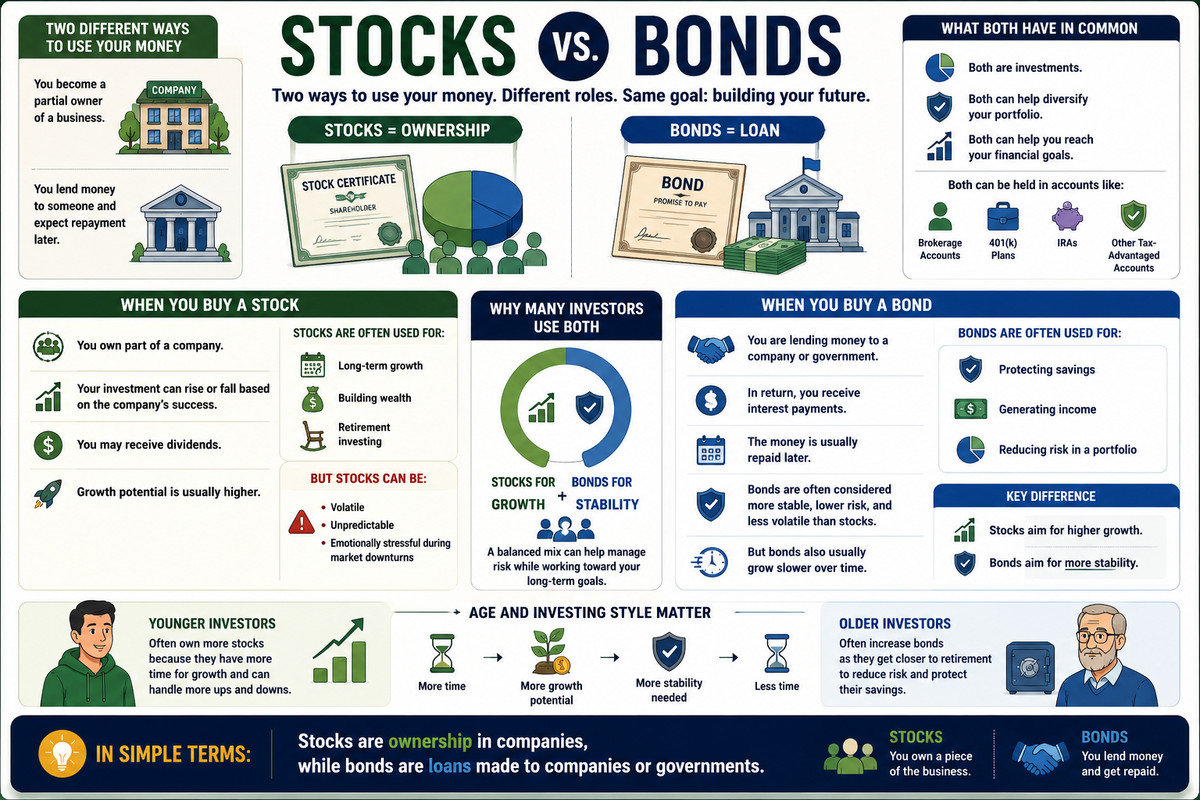
Imagine two different ways to use your money.
The first way:
You become a partial owner of a business.
The second way:
You lend money to someone and expect repayment later.
That is basically the difference between stocks and bonds.
When you buy a stock:
- you own part of a company
- your investment can rise or fall based on the company’s success
- you may receive dividends
- growth potential is usually higher
Stocks are often used for:
- long-term growth
- building wealth
- retirement investing
But stocks can also be:
- volatile
- unpredictable
- emotionally stressful during market downturns
Bonds work differently.
When you buy a bond:
You are lending money to a company or government.
In return:
- you receive interest payments
- the money is usually repaid later
Bonds are often considered:
- more stable
- lower risk
- less volatile than stocks
But bonds also usually grow slower over time.
This is why many investors use both:
- stocks for growth
- bonds for stability
Younger investors often own more stocks because they have more time for growth.
Older investors sometimes increase bonds to reduce risk and protect savings.
In simple terms:
Stocks are ownership in companies, while bonds are loans made to companies or governments.