How Does Someone “Own” Part of a Company?
What does it actually mean to own part of a company? This simple beginner-friendly guide explains stock ownership using a pizza shop example anyone can understand.
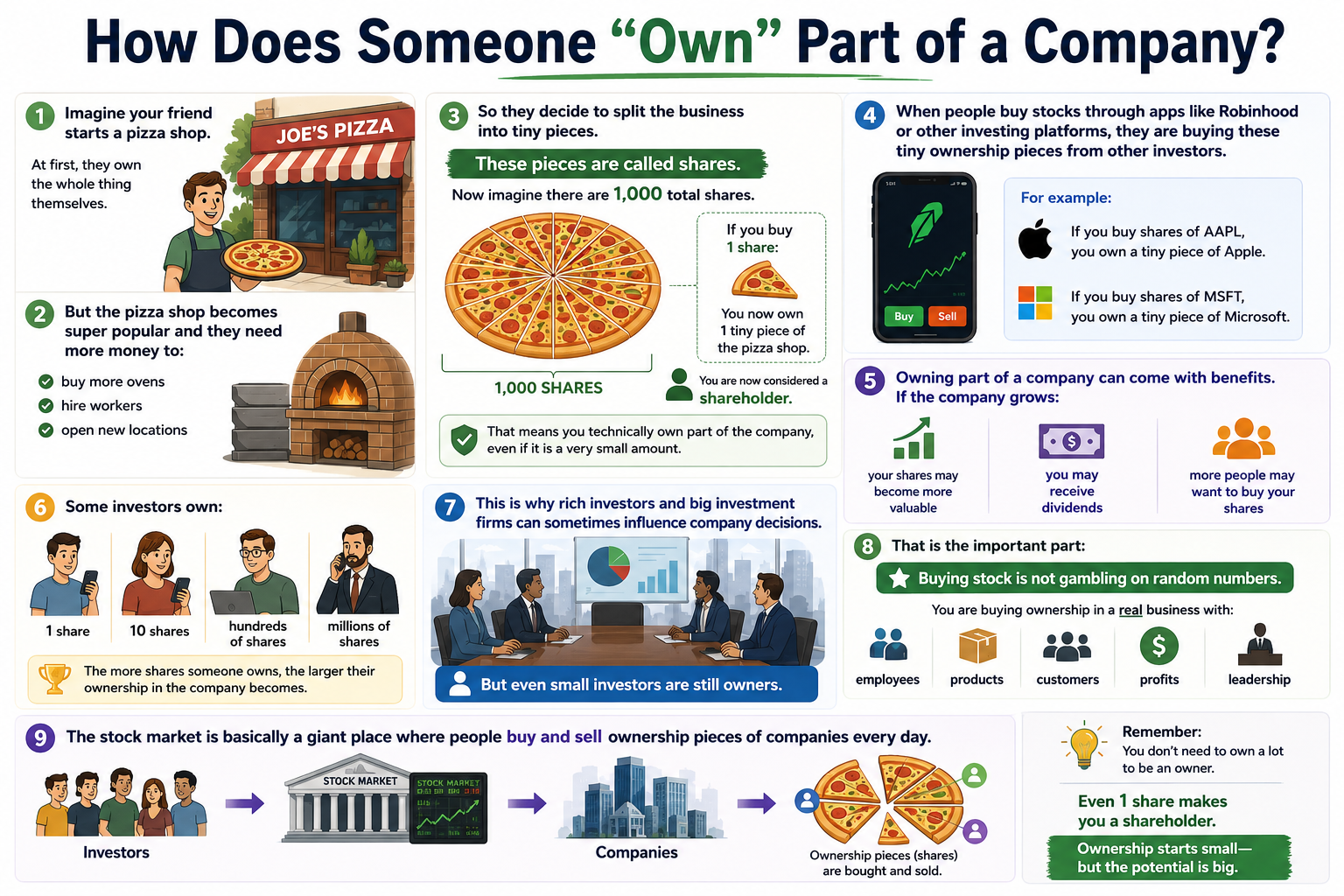
Imagine your friend starts a pizza shop.
At first, they own the whole thing themselves.
But the pizza shop becomes super popular and they need more money to:
- buy more ovens
- hire workers
- open new locations
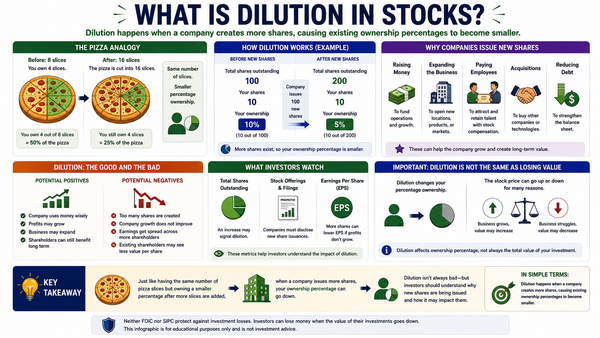
So they decide to split the business into tiny pieces.
These pieces are called shares.
Now imagine there are 1,000 total shares.
If you buy 1 share:
You now own 1 tiny piece of the pizza shop.
You are now considered a shareholder.
That means you technically own part of the company, even if it is a very small amount.
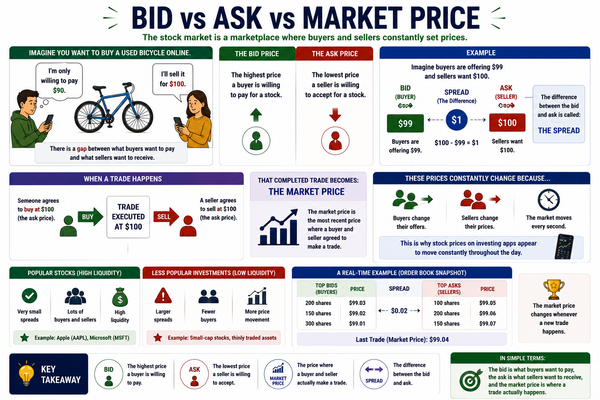
When people buy stocks through apps like Robinhood or other investing platforms, they are buying these tiny ownership pieces from other investors.
For example:
- If you buy shares of AAPL, you own a tiny piece of Apple.
- If you buy shares of MSFT, you own a tiny piece of Microsoft.
Owning part of a company can come with benefits.
If the company grows:
- your shares may become more valuable
- you may receive dividends
- more people may want to buy your shares
Some investors own:
- 1 share
- 10 shares
- hundreds of shares
- millions of shares
The more shares someone owns, the larger their ownership in the company becomes.
This is why rich investors and big investment firms can sometimes influence company decisions.
But even small investors are still owners.
That is the important part:
Buying stock is not gambling on random numbers.
You are buying ownership in a real business with:
- employees
- products
- customers
- profits
- leadership
The stock market is basically a giant place where people buy and sell ownership pieces of companies every day.