How Does a 401(k) Work?
How does a 401(k) actually work? This beginner-friendly guide explains retirement investing using simple real-world examples anyone can understand.
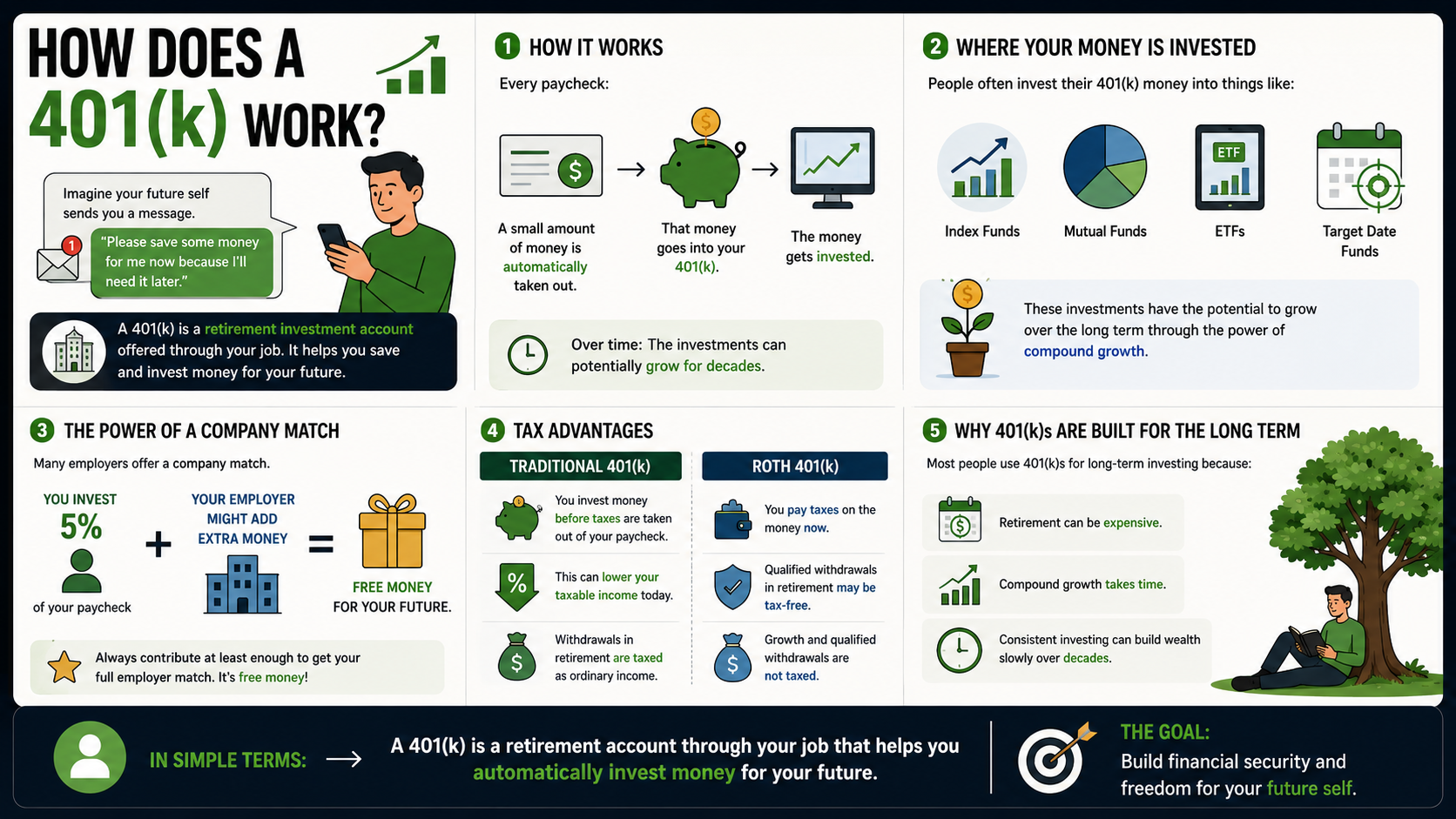
Imagine your future self sends you a message.
The message says:
“Please save some money for me now because I’ll need it later.”
A 401(k) is one of the ways people do that.
A 401(k) is a retirement investment account usually offered through your job.
It helps people save and invest money for the future.
Here is how it usually works:
Every paycheck:
- a small amount of money is automatically taken out
- that money goes into your 401(k)
- the money gets invested
People often invest their 401(k) money into things like:
- index funds
- mutual funds
- ETFs
- target date funds
Over time:
The investments can potentially grow for decades.
One reason 401(k)s are popular is because many employers offer a company match.
For example:
Imagine you invest:
- 5% of your paycheck
Your employer might also add:
- extra money into your account
This is often called:
Free money for retirement.
Another benefit is taxes.
Traditional 401(k)s usually allow people to invest money before taxes are taken out of their paycheck.
That can lower taxable income today.
Then later in retirement:
- withdrawals are taxed
Some jobs also offer a Roth 401(k).
With a Roth version:
- taxes are paid now
- qualified withdrawals later may be tax-free
Most people use 401(k)s for long-term investing because:
- retirement can be expensive
- compound growth takes time
- consistent investing can build wealth slowly over decades
In simple terms:
A 401(k) is a retirement account through your job that helps you automatically invest money for your future.