ETF vs Mutual Fund
What is the difference between an ETF and a mutual fund? This beginner-friendly guide explains both using simple real-world examples anyone can understand.
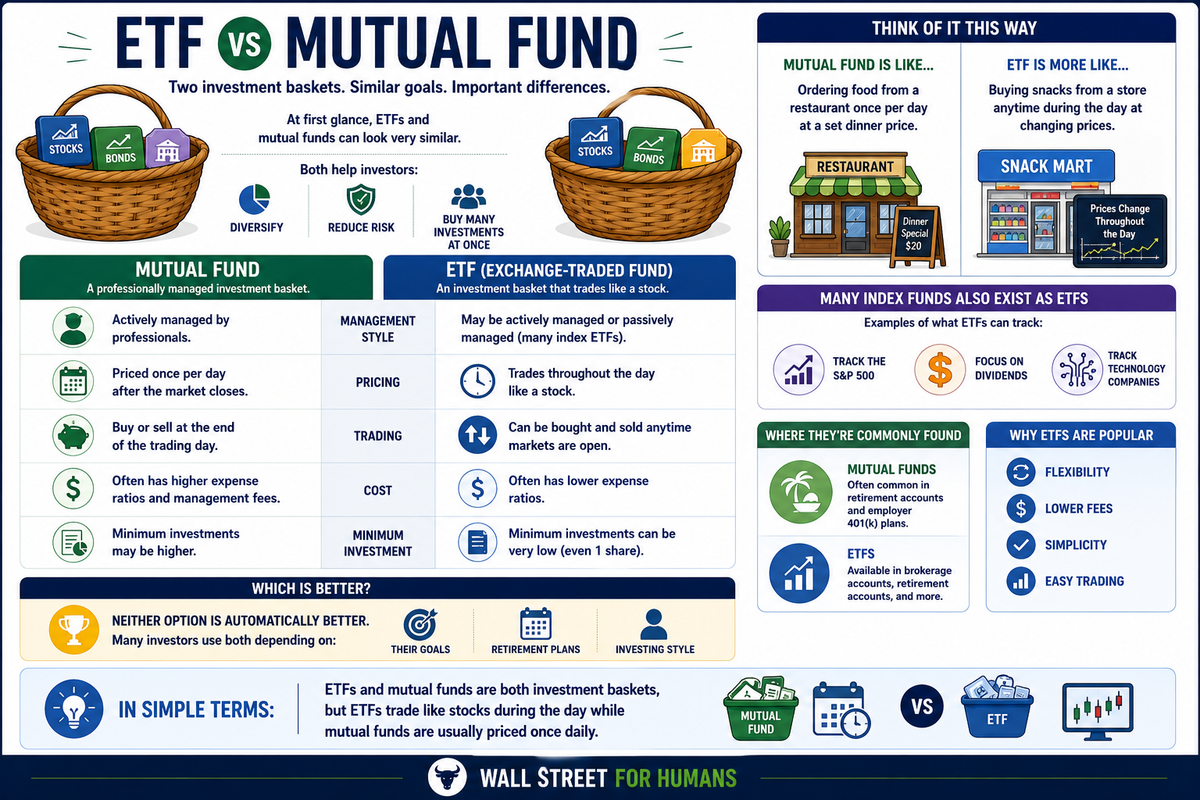
Imagine two giant baskets filled with investments.
Both baskets may contain:
- stocks
- bonds
- hundreds of companies
At first glance:
ETFs and mutual funds can look very similar.
Both allow investors to:
- diversify
- own many investments at once
- avoid picking individual stocks themselves
But there are some important differences.
An ETF trades throughout the day like a stock.
That means:
- prices constantly move while the market is open
- investors can buy or sell anytime during trading hours
A mutual fund usually works differently.
Mutual funds are typically priced:
Once at the end of the trading day.
Another difference is management style.
Some mutual funds are actively managed, meaning professionals constantly choose investments trying to outperform the market.
Many ETFs are more passive and simply follow an index like the S&P 500.
ETFs are also often known for:
- lower fees
- flexibility
- simplicity
But both ETFs and mutual funds can be useful depending on an investor’s goals.
In simple terms:
ETFs and mutual funds are both investment baskets, but ETFs trade like stocks while mutual funds are usually priced once per day.