Bid vs Ask vs Market Price
What is the difference between the bid price, ask price, and market price? This beginner-friendly guide explains stock pricing using simple real-world examples anyone can understand.
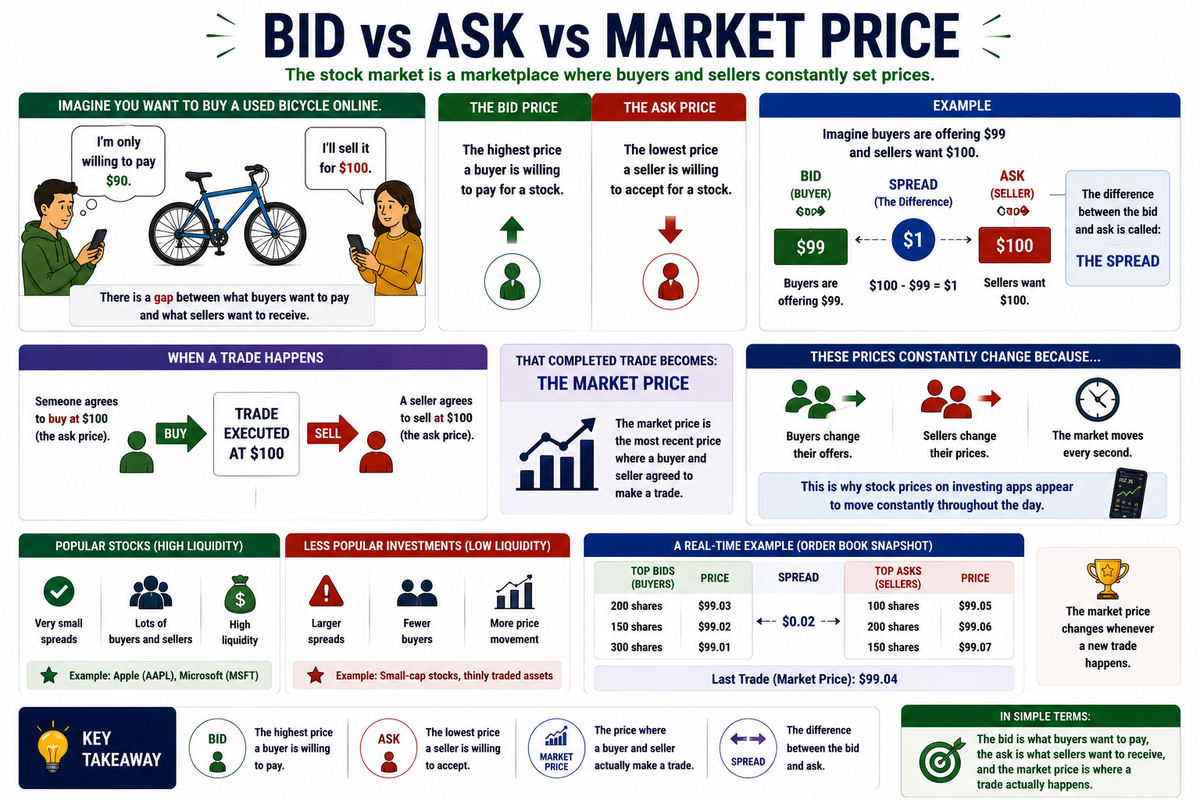
Imagine you want to buy a used bicycle online.
One person says:
“I’ll sell it for $100.”
Another person says:
“I’m only willing to pay $90.”
There is a gap between:
- what buyers want to pay
- and what sellers want to receive
The stock market works the same way.
The bid price is:
The highest price a buyer is willing to pay for a stock.
The ask price is:
The lowest price a seller is willing to accept for a stock.
For example:
Imagine:
- buyers are offering $99
- sellers want $100
Then:
- the bid is $99
- the ask is $100
The difference between them is called:
The spread
Now imagine someone agrees to buy at $100.
That completed trade becomes:
The market price
The market price is simply:
- the most recent price where a buyer and seller agreed to make a trade
These prices constantly change because:
- buyers change their offers
- sellers change their prices
- the market moves every second
Popular stocks often have:
- very small spreads
- lots of buyers and sellers
- high liquidity
Less popular investments may have:
- larger spreads
- fewer buyers
- more price movement
This is why stock prices on investing apps can appear to move constantly throughout the day.
In simple terms:
The bid is what buyers want to pay, the ask is what sellers want to receive, and the market price is where a trade actually happens.